

Published on Oct 30th, 2026
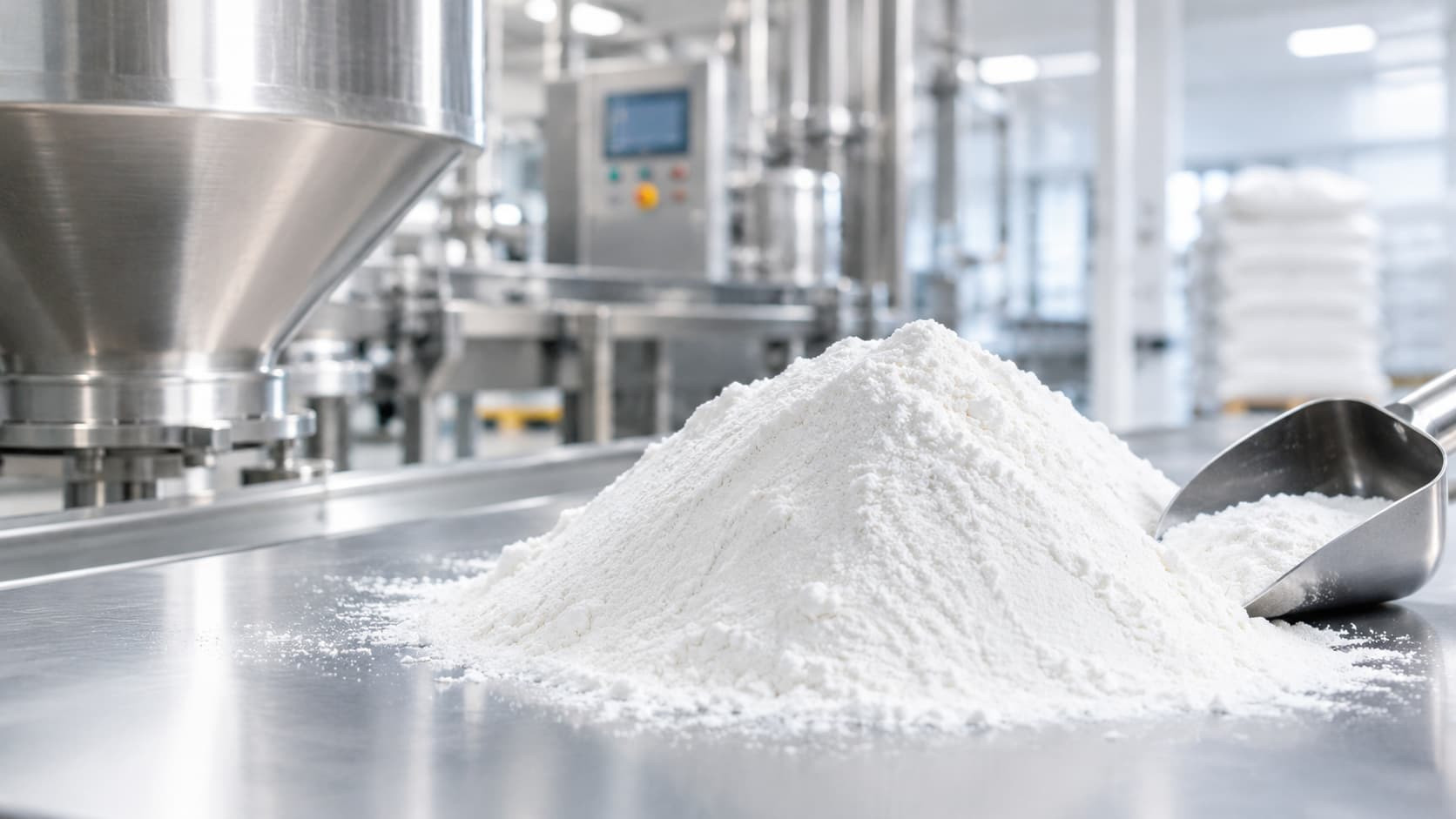
Rice maltodextrin is widely used in food and beverage products because of its neutral taste and its ability to add texture, bulk, solids, and improve solubility and powder performance. However, the ingredient specification alone does not always determine how it will perform in a finished product.
Factors such as processing conditions, storage, mixing, heating, and how the maltodextrin is added to a formulation can all influence the final results. Understanding these factors can help food manufacturers achieve more consistent performance, from initial product development and trials through to full-scale production.
This is especially important in applications such as dry mixes, beverages, bakery products, nutritional formulations, and other products where good powder flow, easy dispersion, and consistent results are important.
For manufacturers looking for maltodextrin and gluten-free options, rice-based maltodextrin can be a useful choice when developing formulations around specific ingredient requirements. As with any food ingredient, proper processing, handling, storage, and supply-chain controls remain important for maintaining consistent quality and performance.
Rice Maltodextrin is a fine, white, free-flowing powder derived from rice starch through a controlled hydrolysis process. It offers a neutral to mildly sweet taste, along with excellent absorption and flavor-carrying properties, making it an ideal ingredient for spray-drying liquid formulations and producing powdered food products.
With its clean taste profile and versatile functional properties, Rice Maltodextrin is well suited for a broad range of food, beverage, and nutrition applications.
Food manufacturing involves several stages, and each one can affect the behavior of a powdered ingredient.
Temperature, moisture, mixing, drying, storage, and interactions with other ingredients can all influence processing performance. For example, a powder added to a cold beverage may behave differently from the one incorporated into a formulation that is subsequently heated.
The same applies to dry blends. If moisture enters the powder system during storage, clumping or changes in flow can make weighing, conveying, and blending more difficult.
Rather than evaluating the ingredient in isolation, manufacturers should consider how it performs under the actual conditions used in production.
Temperature is an important variable in food processing.
When rice maltodextrin is incorporated into a heated formulation, both processing temperature and exposure time can affect the overall behavior of the food system. The effect will depend on the complete formulation, equipment, processing conditions, and other ingredients present.
Excessive or prolonged heating may affect other components of the product, while inadequate processing can make it more difficult for ingredients to disperse or integrate properly.
For this reason, product developers should evaluate the ingredient under the same or similar conditions used during commercial production rather than relying only on small laboratory trials.
Moisture is one of the easiest ways to create problems with dry powder.
If rice maltodextrin absorbs moisture during storage or handling, it may begin to clump, flow less freely, or become harder to disperse. These changes can affect everyday production tasks such as conveying, weighing, blending, and filling.
This becomes especially relevant in maltodextrin and gluten free formulations, where several dry ingredients may be handled together and each ingredient can have different moisture sensitivities.
Controlled humidity, suitable packaging, and appropriate storage practices can help protect the powder and maintain its intended characteristics.
How an ingredient is added to a formulation can be just as important as the ingredient itself.
Mixing speed, mixing time, ingredient addition order, particle size, and the amount of liquid present can all affect dispersion and distribution.
In a dry blend, for example, the goal is to achieve a consistent distribution throughout the powder system. Poor mixing can contribute to segregation and variations in the composition of different portions of the finished product.
Liquid formulations present a different set of considerations. The addition method and mixing energy can affect how quickly and evenly the powder becomes incorporated.
For this reason, mixing conditions should be considered during product development rather than treated as a separate production-stage issue.
Drying is another important stage in the production of powdered ingredients.
Drying conditions can influence factors such as moisture level, particle characteristics, density, and flow behavior. These properties can have a direct effect on how easily a powder is stored, transported, measured, and incorporated into a formulation.
The ideal powder characteristics can also vary depending on the application. An ingredient used in an instant beverage may have different processing requirements from one intended for a bakery premix or dry seasoning.
This is why manufacturers should evaluate both the ingredient specification and the physical characteristics required for the finished application.
Processing considerations do not end when the ingredient leaves the manufacturing process. Storage conditions can also affect powder performance before the ingredient reaches the production line.
Humidity, temperature, packaging, and storage duration are all worth considering. Poor storage conditions can allow a powder to absorb moisture, potentially leading to clumping and changes in flowability or dispersion.
For manufacturers working with maltodextrin and gluten free formulations, proper storage is particularly important when several powdered ingredients are handled within the same facility.
Keeping the product in appropriate storage conditions helps ensure that it reaches the formulation stage as close as possible to its intended specification.
For manufacturers developing gluten-free products, ingredient selection is only one part of the process. Supplier documentation, manufacturing practices, raw material sources, and applicable certification or testing requirements also need to be considered.
Rice-based maltodextrin may be suitable for formulations where manufacturers are looking for an ingredient derived from rice rather than another starch source. However, the term rice maltodextrin by itself should not be treated as a substitute for verifying the supplier's specifications and documentation.
When maltodextrin and gluten free requirements are important to a product, manufacturers should review the complete supply chain. This can include raw material sourcing, processing conditions, handling practices, and any relevant testing or certification.
Rice maltodextrin can be used across a wide range of food and beverage applications, but the ideal specification and performance requirements can vary depending on the product and manufacturing process.
In baked goods, rice maltodextrin can help with moisture retention, texture, and overall product consistency. DE values in the range of 10–20 may be suitable for applications where texture and moisture control are important. Higher DE values generally provide greater sweetness and solubility, while lower DE values can offer more body and structure.
For beverages and powdered drink mixes, good solubility and easy dispersion are often key considerations. Rice maltodextrin can provide solids and bulk while maintaining a relatively neutral flavor profile, allowing fruit flavors, botanicals, and functional ingredients to remain prominent. The appropriate specification should be selected based on factors such as the desired solubility, sweetness, and processing conditions.
Depending on the formulation and ingredient specification, rice maltodextrin is commonly used in:
Powdered beverage mixes
Nutritional formulations
Bakery products
Snack foods
Dry blends
Seasonings and seasoning blends
Confectionery products
Dairy and dairy-alternative formulations
Instant food products
Each application places different demands on the ingredient. For example, a beverage manufacturer may focus primarily on solubility and dispersion, while a dry-blend manufacturer may be more concerned with flowability, uniform distribution, and resistance to clumping.
For this reason, choosing rice maltodextrin should go beyond simply looking at the ingredient specification. Factors such as DE value, processing conditions, storage, mixing, and the way the ingredient is incorporated into the formulation can all influence its final performance. Selecting the right specification for the specific application can help manufacturers achieve better consistency, smoother processing, and more reliable results from product development through full-scale production.
A few practical steps can help manufacturers achieve more consistent results when working with rice maltodextrin:
Control moisture: Protect the powder from unnecessary humidity during storage and processing.
Review temperature: Establish suitable heating conditions based on the complete formulation and production process.
Optimize mixing: Evaluate ingredient addition order, mixing time, and mixing intensity.
Monitor powder handling: Watch for changes in flow, clumping, dispersion, and segregation during production.
Verify specifications: Confirm relevant moisture, particle, and quality parameters with the ingredient supplier.
Test under real conditions: Laboratory trials are useful, but pilot-scale and production trials can reveal issues that are not always visible during small-scale testing.
These measures can help reduce avoidable processing variation and make the performance of the ingredient more predictable from batch to batch.
Successful formulation is not only about choosing an ingredient that fits a specification. Supplier consistency, technical support, traceability, documentation, and understanding of the intended application can also matter.
When sourcing rice maltodextrin, manufacturers should consider whether the supplier can provide consistent product specifications and the information needed to evaluate the ingredient for its intended use.
This is particularly important when a formulation has specific requirements around powder functionality, processing performance, or maltodextrin and gluten free considerations.
A knowledgeable ingredient supplier can help product developers assess the ingredient in the context of their formulation rather than assuming that one specification will perform identically across every application.
The way rice maltodextrin performs in a finished product depends on more than its basic ingredient specification. Factors such as temperature, moisture, mixing, drying, storage, and the specific application can all affect how the powder behaves during processing and in the final product.
For food manufacturers, it is helpful to evaluate rice maltodextrin under the same conditions it will experience during actual production. Testing the ingredient in real processing conditions can help identify potential challenges with powder flow, dispersion, clumping, or overall consistency before they affect larger production runs.
For products where gluten-free requirements, powder functionality, and reliable processing are important, selecting the right ingredient specification and working with a dependable supplier can make a meaningful difference during product development.
At GluCorp, we work with food manufacturers and product developers to provide responsibly sourced and functional ingredient solutions. Whether you are developing a new formulation or looking to improve the performance of an existing product, our team can help you explore rice maltodextrin options that align with your application and processing requirements.
Get in touch with GluCorp to discuss your next food innovation project.
BackBe the first to know about new products, events and offers.