

Published on Oct 28th, 2026
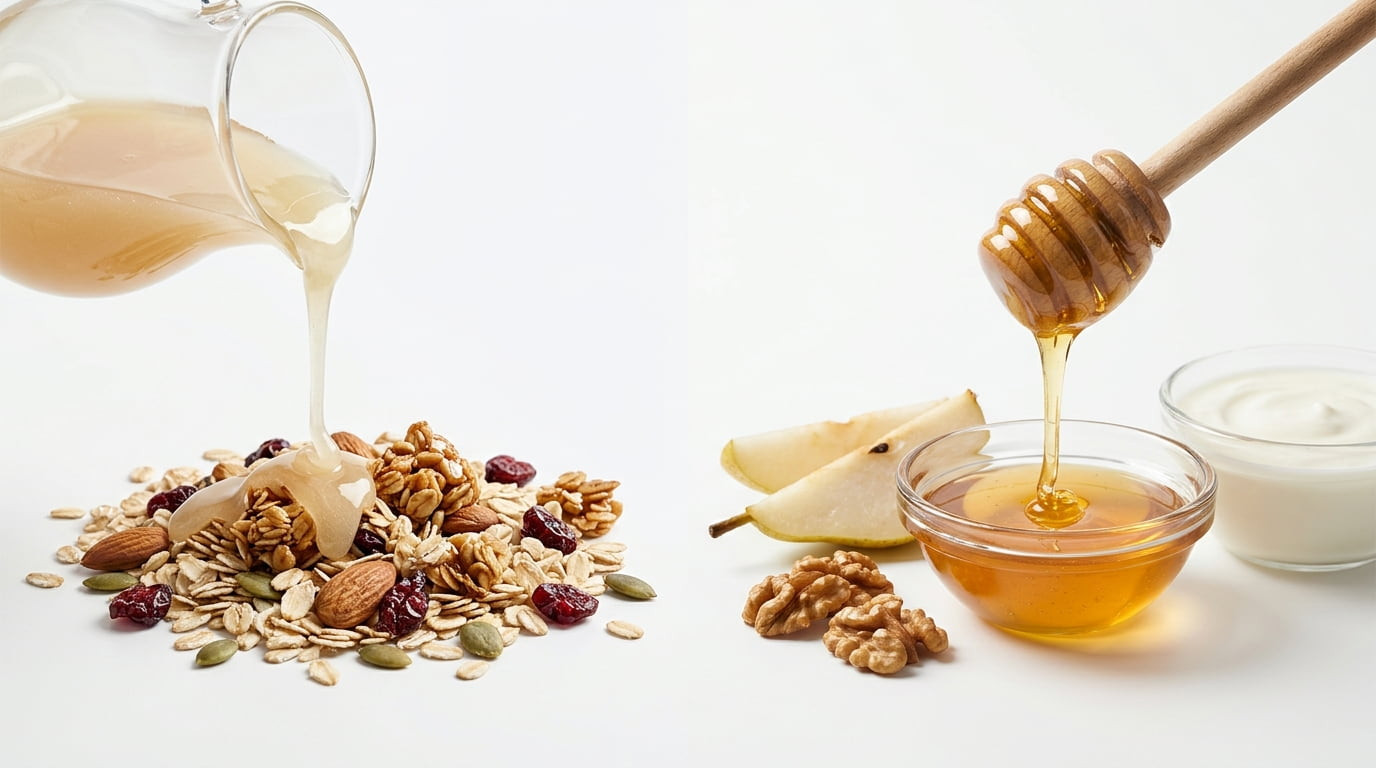
Choosing a sweetener for everyday cooking is not always as simple as choosing the rest of the ingredients in your household cooking. Different sweeteners bring different levels of sweetness. Not only this, the textures, flavors, and functional properties a particular sweetener holds are different from the other sweeteners. Some blend easily into drinks, while others work better in baking, sauces, or homemade snacks. Therefore, different recipes need a different sweetener, depending on what you are trying to achieve from it.
Two ingredients that often come up in this conversation are brown rice syrup and honey. Both are used as liquid sweeteners, but they behave differently when added to food. Honey is known for its distinct floral flavor and natural sweetness, while rice syrup has a milder taste and a thicker consistency that can be useful in a variety of recipes.
So, when comparing the two, which one works better? The answer depends on understanding the sweetener that you are using, what you're making with it, the flavor you want to bring to your recipe, and how the sweetener needs to perform in this food item.
Brown rice syrup is a liquid sweetener made from brown rice. The rice starch is broken down into simpler sugars, using natural enzymes. This process turns the starch into a smooth, thick syrup with a mild, clean sweetness.
It’s not only used as a sweetener, but also as a binding ingredient in a range of products like cereals, snack bars, baked goods, sauces, and beverages.
Rice syrup generally has a more neutral flavor unlike honey, which has a recognizable taste that can vary depending on the flowers from which bees collect nectar. This makes rice syrup a useful choice for keeping a neutral taste and avoiding any flavors that could overpower the original and desired taste.
Its thick consistency also makes it suitable for applications where binding and texture matter, such as granola bars, cereal clusters, baked goods, and homemade snack recipes.
Honey is produced by bees from flower nectar. Its floral source and processing play an important role in its flavor, color, aroma, and consistency. Honey has a distinctive sweetness. It is generally sweeter than rice syrup. Therefore, you need a lesser amount of honey when creating a certain recipe.
Honey also contains a mixture of naturally occurring sugars, mainly fructose and glucose, along with small amounts of other compounds. Its distinctive flavor can complement ingredients such as nuts, fruits, spices, and whole grains.
However, honey's strong flavor is not suitable for every recipe. In some applications, a milder sweetener may be more appropriate.
Although both brown rice syrup and honey are used to add sweetness, they behave differently in food applications. Brown rice syrup has a mild, relatively neutral flavour, while honey has a more distinctive floral taste that can vary depending on its source. Brown rice syrup is also generally less sweet than honey, with a thick, sticky consistency that makes it useful for adding moisture and helping bind ingredients together. Its main sugars are glucose and maltose, along with other carbohydrates depending on how it is processed. Honey, on the other hand, is primarily made up of fructose and glucose and can range in texture from runny to thick.
These differences are specifically noticeable in baking and other food applications. Brown rice syrup can provide sweetness, moisture, and binding without introducing a strong flavour, while honey contributes its own characteristic taste along with sweetness and moisture. Ultimately, neither ingredient is better across the board; the right choice depends on the flavour, texture, sweetness level, and functionality needed for the final product.
The most useful way to compare brown rice syrup and honey is to look at how they behave in common kitchen applications.
Honey is often used in baking because it provides noticeable sweetness and contributes moisture. Its flavor can work particularly well in recipes containing cinnamon, nuts, citrus, or dried fruit.
Rice syrup, on the other hand, offers a milder flavor. It can be useful when you want sweetness without allowing the sweetener to dominate the taste of the baked product.
However, both ingredients contain water and sugars, so replacing one with the other may affect browning, moisture, and texture. It is usually better to adjust the recipe rather than assume a direct one-to-one substitution will produce identical results.
This is an application where brown rice syrup can be particularly useful.
Its thick, sticky consistency helps hold ingredients such as oats, seeds, nuts, and dried fruit together. This makes it a practical option for homemade granola bars and no-bake snack bites.
Honey can also act as a binder, but its stronger sweetness and flavor may change the overall taste of the recipe.
If you're making a snack where structure and binding are just as important as sweetness, rice syrup is worth considering.
Honey is a familiar choice for tea and other hot drinks because it dissolves relatively easily and adds a recognizable flavor.
Rice syrup can also be stirred into beverages, although its thicker consistency may require a little more mixing. Its milder taste can be useful when you don't want the sweetener to compete with ingredients such as berries, cocoa, or plant-based milk.
For cold drinks, dissolving either sweetener in a small amount of warm liquid before adding it to the full recipe can make mixing easier.
Both sweeteners can be used in sauces and marinades, but they create slightly different results.
Honey works well in glazes and dressings where its flavor is part of the overall recipe. It can pair nicely with mustard, garlic, citrus, and spices.
Rice syrup is useful when you want a more subtle sweetness and a thicker consistency. It can help add body to sauces without introducing the distinctive flavor of honey.
The right choice depends on whether you want the sweetener to stand out or simply support the other ingredients.
Yes, in many recipes, honey can be replaced with brown rice syrup, but the result may not be exactly the same.
Since rice syrup is generally less sweet than honey and has a different sugar composition, a substitution can affect both flavor and texture.
When making the change, consider the following:
Sweetness: You may need to adjust the quantity to achieve your preferred taste.
Moisture: Both are liquid sweeteners, so changing the amount can affect the consistency of a batter or dough.
Texture: Rice syrup's thicker consistency may be useful in recipes that need a sticky binder.
Flavor: Rice syrup has a milder taste, while honey contributes its own distinctive flavor.
Browning: Different sugar compositions can influence how baked goods brown during cooking.
For best results, test the substitution in small batches, especially when preparing baked goods where ingredient ratios matter.
If rice syrup is not available or does not suit your recipe, there are several alternatives for brown rice syrup worth considering.
The right option depends on the role the syrup plays in the recipe.
Honey is a convenient option when you want a liquid sweetener with a stronger flavor and higher sweetness. It can work in baking, dressings, sauces, and homemade snacks, although the flavor may be more noticeable.
Maple syrup offers a distinctive flavor and a thinner consistency than rice syrup. It works well in pancakes, baked goods, sauces, and breakfast recipes. Because it is less thick, it may not provide the same binding properties in recipes such as granola bars.
Agave syrup has a relatively mild flavor and is generally sweeter than rice syrup. It can be useful in beverages, dressings, and desserts where a liquid sweetener is needed.
Date syrup provides sweetness along with a rich, caramel-like flavor. It can work well in smoothies, sauces, and baked goods, although its stronger taste and darker color may affect the final product.
When choosing between these alternatives for brown rice syrup, think about more than sweetness. Consider consistency, moisture, flavor, and the purpose of the ingredient in the recipe.
A usual assumption could be that one sweetener is automatically healthier than the other because it comes from a plant or is less processed. However, the nutritional differences are more complicated.
Both rice syrup and honey contain sugars and contribute to overall sugar intake. Honey contains naturally occurring small amounts of other compounds, while rice syrup is primarily used as a carbohydrate sweetener.
Neither should be treated as a sugar-free or unlimited alternative. Both need to be considered as part of an overall balanced diet.
For everyday cooking, the more practical approach is to choose a sweetener based on the recipe's requirements, use appropriate quantities, and pay attention to the total amount of added sugars.
When food manufacturers choose a sweetener, they do not only compare the flavor and sweetness but also functional performance, consistency, ingredient specifications, sourcing, and production requirements all matter.
Brown rice syrup can be useful in products where a mild flavor, thick consistency, and binding properties are important. It may be considered for cereal bars, baked goods, confectionery, sauces, and other food applications.
Honey may be more appropriate when its distinctive flavor is an important part of the product's identity.
Manufacturers also need to consider factors such as moisture content, solids level, sweetness profile, viscosity, and how the ingredient behaves during heating and storage.
Working with an experienced ingredient supplier can help product developers identify a syrup specification that suits their formulation and manufacturing process.
When comparing brown rice syrup and honey, there is no single answer that works for every recipe.
Honey is a useful choice when you want a stronger flavor and a higher level of sweetness. Brown rice syrup may be more suitable when you need a milder-tasting sweetener with a thick consistency that can help bind ingredients together.
For granola bars, cereal clusters, and certain confectionery applications, rice syrup's texture can be particularly helpful. For tea, dressings, and recipes where floral sweetness is desirable, honey may be a better fit.
Ultimately, the best choice comes down to the recipe, the desired flavor, and the functional role of the sweetener.
At GluCorp, we understand that choosing the right sweetener is about finding the right balance of taste, texture, and functionality. We work with food manufacturers and product developers to provide ingredient solutions suited to a variety of food applications. If you're exploring brown rice syrup for your next product or looking for a sweetener that meets your formulation requirements, get in touch with our team. We'd be happy to discuss your needs and help you find an ingredient solution that works for your product.
BackBe the first to know about new products, events and offers.