

Published on Sep 21st, 2026
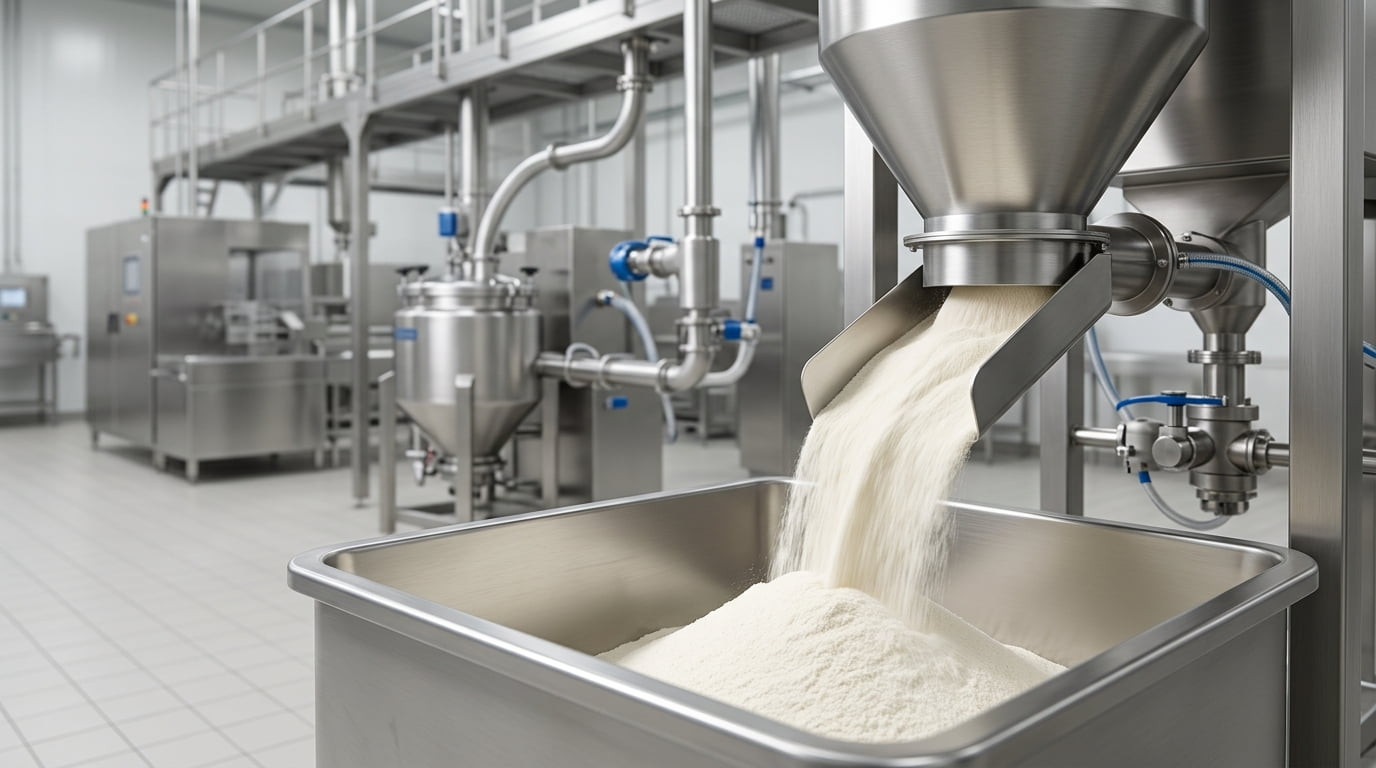
For food manufacturers, producing a high-quality powdered product involves more than selecting the right flavor or nutritional profile. The way a powder flows, mixes, disperses, and behaves during processing can have a significant impact on manufacturing efficiency and finished product quality.
This is where functional ingredients such as rice maltodextrin can play an important role. Used across a variety of food and beverage applications, rice-based maltodextrin can contribute to desirable powder characteristics while supporting formulation and processing requirements.
Understanding what is rice maltodextrin and how it behaves in powdered formulations can help manufacturers make more informed ingredient decisions.
So, what is rice maltodextrin?
Rice maltodextrin is a carbohydrate ingredient derived from rice starch through controlled hydrolysis. The resulting powder is generally mild in flavor and can be used in a variety of food and beverage formulations.
Its functional properties make it useful beyond simply adding carbohydrates. Depending on the formulation, rice maltodextrin can contribute to texture, bulk, mouthfeel, dispersion, and overall powder handling.
For manufacturers, these characteristics can be particularly valuable when developing powdered products that need to remain consistent from production through packaging and, ultimately, preparation by the consumer.
Powder flow refers to how easily and consistently a powdered ingredient moves through processing and handling systems. While it may sound like a minor technical detail, poor powder flow can create significant manufacturing challenges.
Powders that do not flow consistently can cause problems during:
Ingredient dosing
Blending and mixing
Conveying
Filling and packaging
Storage
Reconstitution
Inconsistent flow may also contribute to segregation, clumping, or uneven distribution of ingredients within a blend.
For manufacturers producing nutritional powders, beverage mixes, dry blends, and other powdered products, selecting ingredients with suitable physical properties is therefore an important part of formulation design.
One of the advantages of rice maltodextrin is its versatility in dry food formulations. Its physical characteristics can make it useful as a carrier, bulking agent, or formulation component depending on the application.
When properly selected and processed, it can help manufacturers develop powders with desirable handling and mixing characteristics. This can be especially useful when combining multiple ingredients with different particle sizes, densities, and moisture sensitivities.
However, powder flow is influenced by more than one ingredient. Moisture content, particle size, humidity, storage conditions, processing equipment, and the overall formulation can all affect how a finished powder behaves.
For this reason, manufacturers should evaluate the complete formulation rather than relying on a single ingredient to determine powder performance.
Moisture is one of the biggest factors affecting powder flow. Even a well-designed powdered formulation can develop clumping or poor flow if it absorbs excessive moisture during processing or storage.
Packaging, warehouse conditions, and transportation environments therefore matter just as much as ingredient selection.
Manufacturers working with rice maltodextrin should consider how the ingredient interacts with other components in the formulation and how the finished product will be stored. Controlling moisture throughout the supply chain can help maintain the desired physical properties of the powder.
Ingredient sourcing has become increasingly important as consumers look for products that fit specific dietary preferences. This has also increased interest in maltodextrin and gluten free formulations.
The source of maltodextrin matters. Rice-derived maltodextrin is made from rice starch, making it a useful option for manufacturers developing products where rice-based ingredients fit their formulation requirements.
However, manufacturers should always verify the specifications, certifications, processing environment, and allergen controls of their chosen ingredient supplier rather than making assumptions based solely on the ingredient name.
Clear documentation and reliable sourcing are essential for developing products that meet specific dietary and labeling requirements.
The functionality of rice maltodextrin makes it suitable for a variety of food and beverage applications. Depending on its specifications, it can be incorporated into:
Nutritional and dietary products
Powdered beverages
Dry beverage mixes
Bakery formulations
Snack products
Seasoning blends
Confectionery products
Specialized food formulations
The appropriate grade and inclusion level will depend on the product's technical requirements, processing conditions, and desired characteristics.
For manufacturers, ingredient quality is only one part of the equation. Consistency from batch to batch is equally important.
When sourcing rice maltodextrin, manufacturers should evaluate factors such as product specifications, purity, particle characteristics, moisture content, quality control procedures, documentation, and supply reliability.
A knowledgeable supplier can also help manufacturers select an ingredient that is appropriate for their specific application rather than simply providing a generic powder.
This becomes particularly valuable when developing products where powder flow, dispersion, solubility, and processing performance are critical.
Modern food manufacturing requires ingredients that do more than perform a single task. Manufacturers are looking for solutions that can support processing efficiency, product consistency, clean formulations, and changing consumer expectations.
Understanding what is rice maltodextrin and how it interacts with a complete powder formulation gives product developers a stronger foundation for making these decisions.
From powder handling and blending to storage and final preparation, every stage of production can influence the performance of a finished product. By carefully considering ingredient functionality and working with reliable suppliers, manufacturers can create powdered products that are easier to process and more consistent for consumers.
Choosing the right ingredient can make a meaningful difference in formulation performance and manufacturing efficiency. GluCorp works with food manufacturers to provide innovative, high-quality ingredient solutions for a wide range of applications. Whether you're developing powdered beverages, nutritional products, dry blends, or other food formulations, connect with our team to explore rice maltodextrin solutions tailored to your product and processing needs.
BackBe the first to know about new products, events and offers.