

Published on Sep 28th, 2026
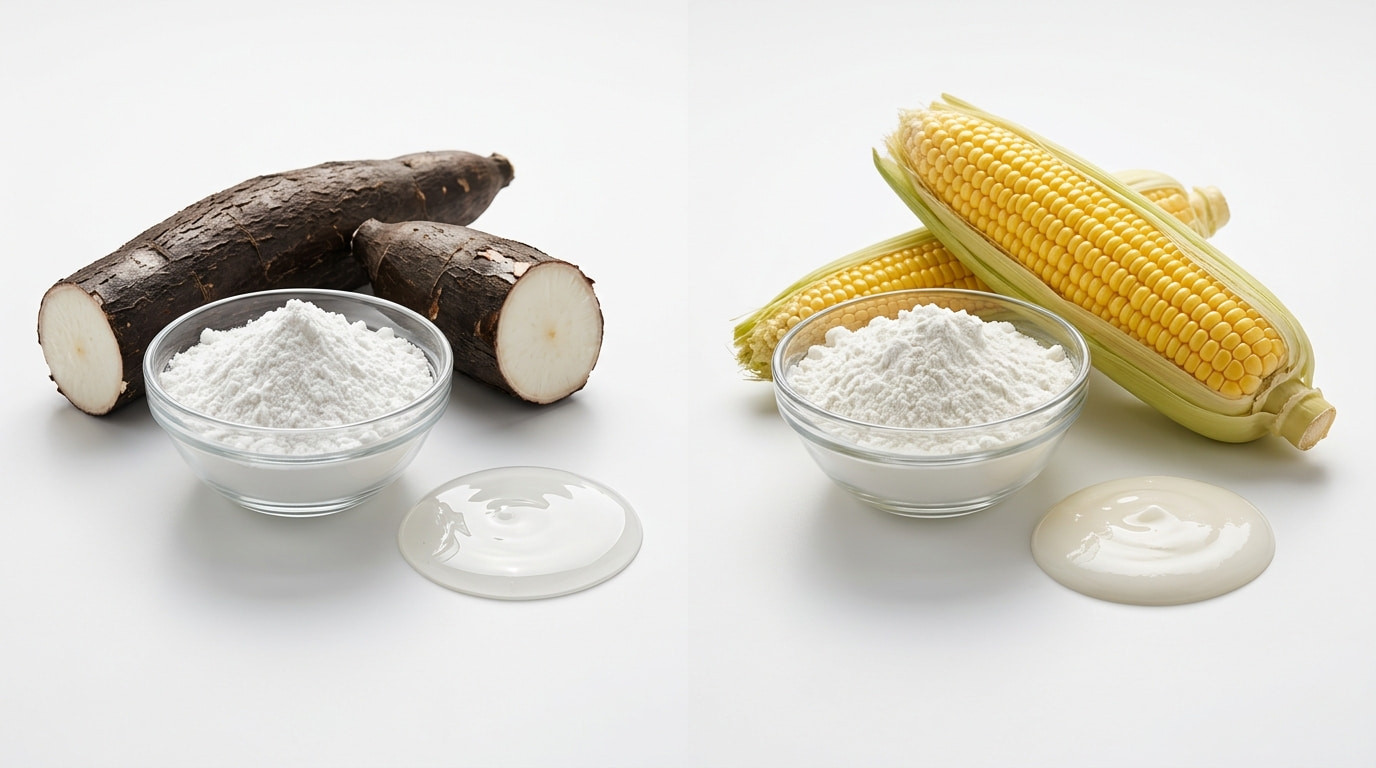
Starches are essential ingredients in modern food manufacturing, playing a vital role in improving texture, consistency, stability, and overall product quality. Among the most commonly used starches are tapioca starch and cornstarch. While they may appear similar at first glance, each offers unique functional properties that make it better suited for specific food applications.
Whether you're developing bakery products, sauces, dairy alternatives, or processed foods, understanding the difference between tapioca starch and cornstarch can help you choose the right ingredient for your formulation.
The most important difference between tapioca starch and cornstarch lies in their source and functionality.
Tapioca starch is extracted from the cassava root, while cornstarch is derived from corn kernels. Although both are widely used as thickening agents, they behave differently during cooking, cooling, and storage.
Tapioca starch is known for producing a glossy appearance, smooth texture, and excellent freeze-thaw stability. Cornstarch, on the other hand, typically creates a more opaque finish and is commonly used where a firmer consistency is desired.
Understanding the difference between tapioca starch and cornstarch allows manufacturers to select ingredients that best match their product requirements.
The versatility of tapioca starch has made it a valuable ingredient across numerous food categories. Some of the most common tapioca starch uses include:
Bakery products
Soups and sauces
Dairy products
Confectionery
Frozen foods
Snacks
Gluten-free formulations
Beverage applications
These diverse tapioca starch uses demonstrate why it has become a preferred ingredient for manufacturers seeking consistent texture, stability, and processing performance.
Its neutral flavor and smooth mouthfeel also make it suitable for products where ingredient functionality should not interfere with taste.
A common question among product developers is whether a tapioca starch substitute for cornstarch is possible.
In many applications, the answer is yes. A tapioca starch substitute for cornstarch can often provide comparable thickening performance while offering additional benefits such as improved clarity, smoother texture, and greater stability during freezing and thawing.
However, ingredient selection should always depend on the specific formulation. Processing conditions, desired texture, product appearance, and shelf-life requirements all influence whether tapioca starch is the ideal replacement.
Working with ingredient specialists can help manufacturers determine the most effective solution for each application.
When comparing tapioca starch vs cornstarch for baking, each starch contributes unique advantages.
Tapioca starch helps create soft textures, improves moisture retention, and contributes to a light crumb structure in baked goods. It is particularly popular in gluten-free baking because it enhances elasticity and improves overall product quality.
Cornstarch is frequently used to create tender textures and provide structure in cakes, cookies, and pastries.
The choice between tapioca starch vs cornstarch for baking ultimately depends on the desired texture, recipe formulation, and finished product characteristics.
Many manufacturers even combine both starches to achieve optimal performance.
There is no universal answer to the question, which is better tapioca starch or cornstarch.
Each ingredient offers distinct functional advantages depending on the product being developed.
Manufacturers looking for excellent freeze-thaw stability, glossy appearance, and smooth texture may prefer tapioca starch. Those requiring firmer gels or specific structural characteristics may find cornstarch more suitable.
Instead of asking which is better tapioca starch or cornstarch, it's often more useful to determine which ingredient best supports the technical and sensory goals of a particular formulation.
The ideal choice depends on product application, processing requirements, consumer expectations, and overall formulation objectives.
Ingredient selection is one of the most important decisions in food manufacturing. Understanding the difference between tapioca starch and cornstarch helps manufacturers develop products that consistently meet quality, texture, and performance expectations.
Whether you're evaluating a tapioca starch substitute for cornstarch, comparing tapioca starch vs cornstarch for baking, exploring various tapioca starch uses, or deciding which is better tapioca starch or cornstarch, selecting the right starch should always be based on your product's specific functional requirements.
As food innovation continues to evolve, versatile starch solutions like tapioca starch will remain essential for creating high-quality products that satisfy both manufacturers and consumers.
The right starch can significantly improve the performance of your food products. GluCorp offers high-quality tapioca-based ingredient solutions designed to support texture, stability, processing efficiency, and product consistency across a wide range of applications. Whether you're exploring tapioca starch uses, looking for a reliable tapioca starch substitute for cornstarch, or optimizing formulations for baking and food production, our team is here to help you develop innovative solutions tailored to your business.
BackBe the first to know about new products, events and offers.