

Published on Nov 23rd, 2026
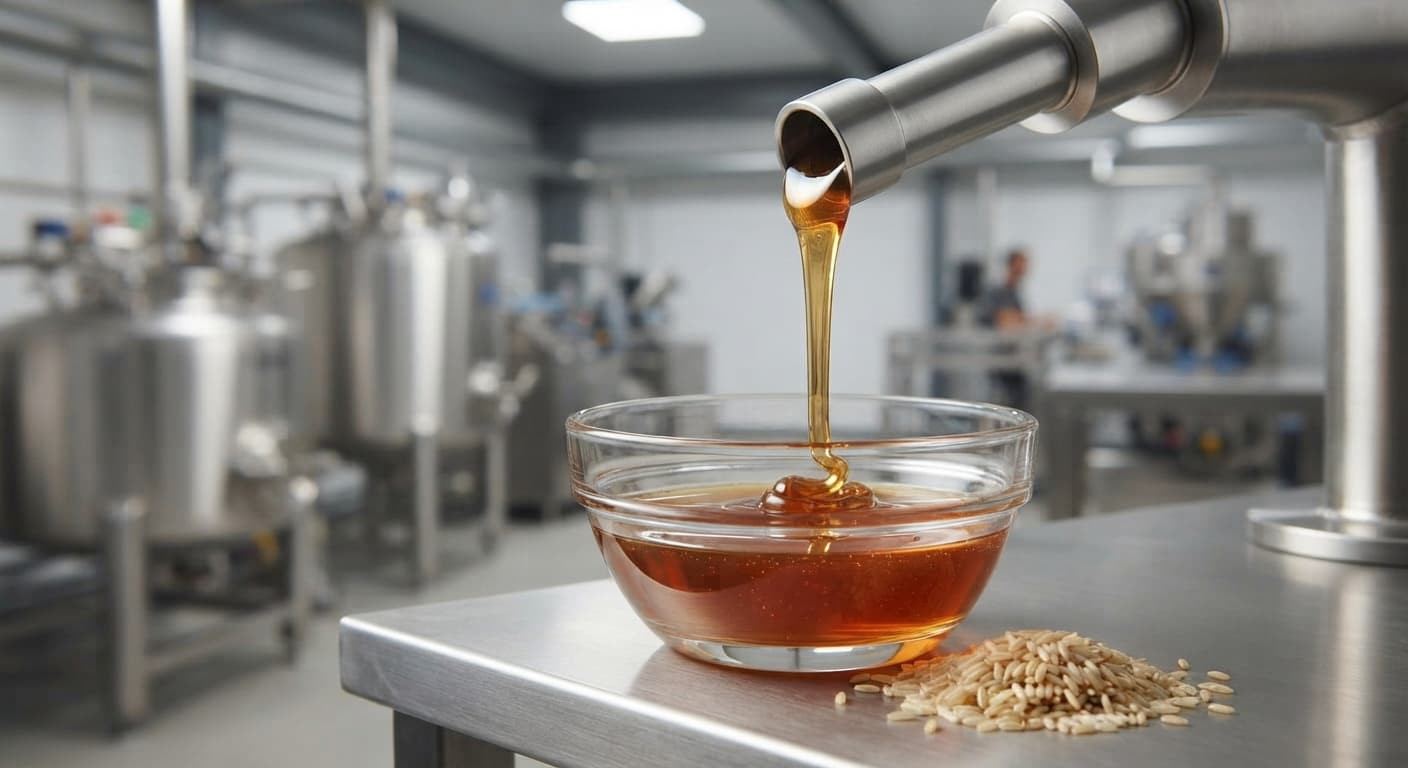
Choosing the right ingredient is an important part of developing consistent, high-performing food products. For manufacturers working with natural sweeteners, ingredient quality can influence everything from flavor and texture to processing efficiency and finished-product stability.
Brown rice syrup is widely used in food manufacturing because of its mild sweetness, binding properties, and ability to contribute moisture to formulations. However, not every syrup performs the same way. Differences in carbohydrate composition, solids content, processing methods, and quality specifications can affect how an ingredient behaves in a particular application.
Whether you're developing bakery products, cereal bars, beverages, confectionery, or other food formulations, understanding what to look for when purchasing brown rice syrup can help you make better sourcing decisions.
One of the first things manufacturers should review when buying brown rice syrup is its composition. Although the ingredient is derived from rice, its functional properties depend on how the rice starch has been processed.
Brown rice syrup is typically produced through enzymatic hydrolysis, which breaks down rice starch into simpler carbohydrates. The resulting syrup contains different sugars and carbohydrate fractions, with the composition varying according to the manufacturing process.
Before purchasing, review the product's technical specification to understand:
Total solids or Brix
Dextrose equivalent (DE)
Carbohydrate composition
Moisture content
pH
Appearance and flavor characteristics
These specifications provide a useful starting point for evaluating whether the ingredient matches your formulation requirements.
Dextrose equivalent, commonly referred to as DE, is an important specification for starch-derived syrups. It indicates the level of reducing sugars in a carbohydrate product relative to its dry solids.
Different DE grades can influence sweetness, viscosity, and functional behavior. For this reason, manufacturers should select a grade based on the intended application rather than assuming that one specification works equally well across all products.
For example, a formulation requiring particular binding or texture characteristics may perform differently with one syrup grade than with another. Similarly, a manufacturer developing a beverage or confectionery product may have different requirements for sweetness and solids.
The best approach is to discuss the desired functional properties with the supplier and conduct application testing before finalizing the ingredient.
The sensory and physical characteristics of brown rice syrup can influence the appearance, flavor, and texture of a finished product.
High-quality syrup should have a flavor profile consistent with its product specification. Depending on the grade and manufacturing process, it may offer mild sweetness with subtle malty, buttery, or honey-like notes.
Manufacturers should evaluate whether the syrup's flavor complements the other ingredients in their formulation. A sensory trial can help determine whether it introduces any unwanted flavor characteristics.
Brown rice syrup can range from light golden or amber to darker shades, depending on the product and processing conditions. Color is not necessarily an indicator of quality on its own.
Instead, buyers should look for consistency with the agreed specification. If the formulation requires a lighter color or a more neutral appearance, a clarified rice syrup may also be worth evaluating.
The syrup's consistency affects how easily it can be pumped, mixed, transferred, and incorporated into a formulation.
Manufacturers should consider viscosity alongside processing temperature, equipment requirements, and the desired texture of the finished product. Consistent physical properties can make ingredient handling more predictable during production.
A reliable ingredient purchase should be supported by clear technical documentation. Product specifications help manufacturers understand the ingredient's characteristics and establish appropriate acceptance criteria.
When purchasing brown rice syrup, request the following documents where applicable:
Technical data sheet or product specification
Certificate of Analysis (COA)
Ingredient declaration
Allergen statement
Microbiological specifications
Relevant contaminant testing information
Storage and shelf-life recommendations
Traceability documentation
The Certificate of Analysis is particularly useful because it provides analytical information for a specific batch. Comparing batch results against the agreed specification helps manufacturers verify ingredient consistency.
Quality documentation should also be reviewed as part of supplier qualification. Certifications and quality management systems can support the evaluation process, but they should not replace ingredient testing or the manufacturer's own quality controls.
For manufacturers developing products with organic positioning, organic brown rice syrup may be an appropriate ingredient to evaluate.
However, organic status should be verified rather than assumed from product descriptions or marketing claims. Buyers should confirm that the ingredient is certified according to the requirements of the intended market and that the certification covers the specific product being purchased.
It is also important to distinguish organic certification from overall ingredient quality. Organic certification relates to production and handling standards, while other aspects of ingredient quality require separate assessment.
Manufacturers should review:
Valid organic certification
Raw material sourcing information
Ingredient traceability
Quality control procedures
Relevant contaminant testing
Consistency between batches
These checks help ensure that sourcing decisions are supported by documentation and appropriate quality assurance practices.
Choosing the right ingredient involves more than evaluating a sample. Manufacturers also need a dependable supply partner who can support production requirements over time.
When comparing brown rice syrup manufacturers, consider their ability to maintain consistent specifications, provide technical documentation, and communicate changes that could affect ingredient performance.
A supplier assessment may include questions about:
Manufacturing and quality management systems
Production capacity and available syrup grades
Batch consistency and testing procedures
Traceability and documentation
Packaging options
Lead times and delivery schedules
Technical support and communication
These factors become particularly important when moving from product development trials to commercial-scale manufacturing.
A high-quality ingredient is not necessarily the one with the highest solids content, the lightest color, or the most pronounced sweetness. It is the ingredient that performs consistently within the intended formulation.
Different applications may require different characteristics.
Application testing is essential because the syrup's behavior depends on the complete formulation and processing conditions.
Manufacturers should evaluate samples under realistic production conditions and confirm that the ingredient meets both functional and quality requirements before placing larger orders.
Sometimes the selected syrup grade may not deliver the desired performance. In such cases, manufacturers can evaluate a brown rice syrup substitute or another ingredient with suitable functional characteristics.
The choice depends on the formulation's priorities. Alternative sweeteners may differ in sweetness intensity, flavor, viscosity, carbohydrate composition, and processing behavior.
Before making a substitution, product developers should assess how the ingredient affects the finished product rather than comparing sweeteners solely by price or sweetness.
A structured comparison can help determine whether the alternative meets the required specifications without compromising product quality.
When deciding where to buy brown rice syrup, manufacturers should focus on suppliers that offer suitable commercial grades, reliable documentation, and consistent product quality.
Industrial ingredient purchasing typically requires more information than a standard retail purchase. Buyers may need technical specifications, batch-level documentation, samples, commercial packaging options, and confirmation of supply capacity.
A dependable sourcing process should include:
Identifying the required syrup grade and application specifications.
Requesting technical documents and relevant quality information.
Evaluating samples through formulation and processing trials.
Reviewing supplier capabilities and documentation.
Confirming packaging, storage, lead times, and commercial terms.
Establishing ingredient acceptance criteria before regular purchasing.
This approach helps manufacturers move beyond price-based purchasing and focus on long-term ingredient consistency.
Buying high-quality brown rice syrup requires a clear understanding of both ingredient specifications and formulation requirements. Composition, DE value, flavor, color, viscosity, quality documentation, and supplier reliability all contribute to a successful purchasing decision.
For manufacturers, the most effective approach is to evaluate the ingredient through technical documentation, sensory assessment, and application testing. A reliable sourcing partner can also help clarify available grades and provide the information needed for ingredient approval.
Ultimately, ingredient quality is defined by consistency, suitability, and reliable performance within the finished product.
At GluCorp, we work with food manufacturers and product developers to explore ingredient solutions that support their formulation and sourcing requirements. Selecting the right ingredient involves understanding its specifications, functional properties, and compatibility with your production process.
If you're evaluating brown rice syrup for your next formulation, get in touch with GluCorp to discuss your application, ingredient specifications, and sourcing needs. Our team can help you explore suitable ingredient options and identify solutions that align with your product development goals.
BackBe the first to know about new products, events and offers.